Backrooms: Lost in Level 0
- 4.0
- Rating
- 1.00M
- Installs
- Free
- Price

 Analysis by App-foxy
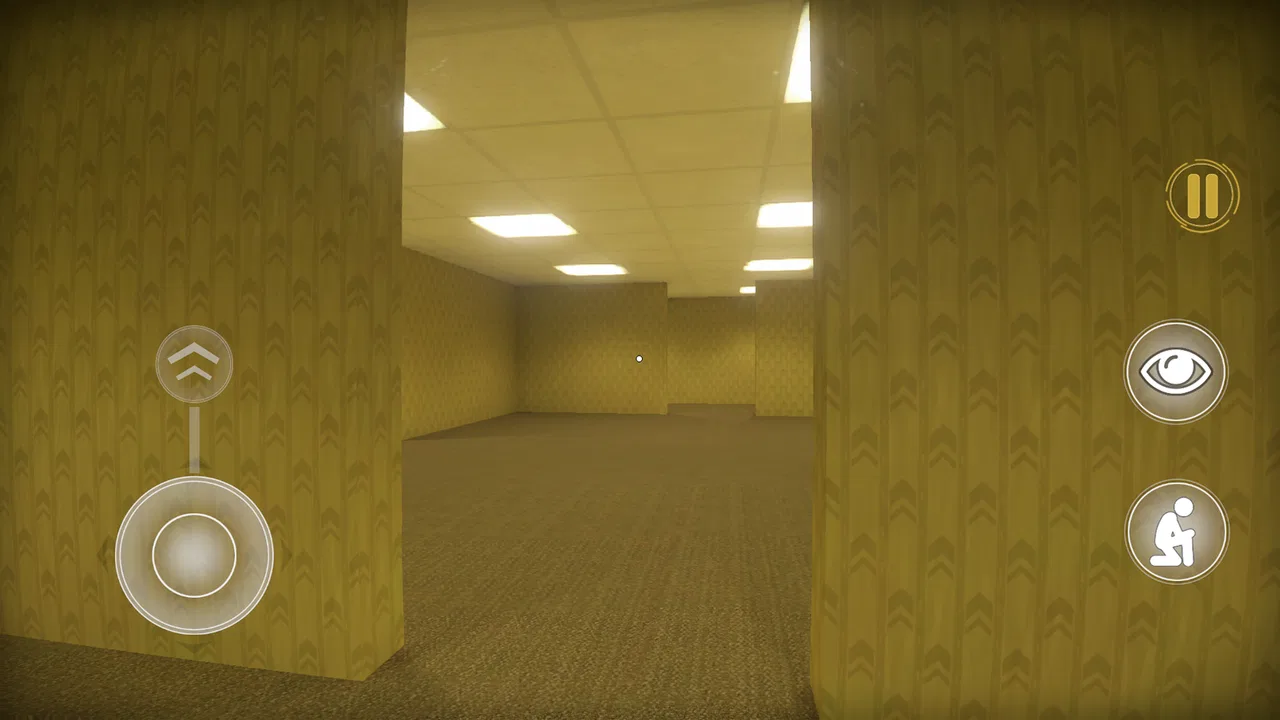
I spent time with Backrooms: Lost in Level 0 as a mobile adventure game built around one simple but effective idea: find your way out of the Backrooms. That premise sounds straightforward, yet the experience depends less on complex storytelling and more on how well I could read the environment, control my movement, and stay oriented while exploring an unsettling space. It is free, aimed at Everyone, and developed by Apache Gunner Games, so it is easy to approach if you want a quick horror-tinged adventure without committing to a paid title.
My overall impression is mixed in a useful way. The game creates a recognizable atmosphere and gives wandering a clear purpose, but it also asks the player to tolerate uncertainty. I often had to slow down, inspect surroundings carefully, and remember where I had already been. That makes it interesting for players who enjoy exploration, but less comfortable for anyone who prefers direct objectives, constant guidance, or a predictable route.
How the game handles readability and navigation
The central challenge is not simply moving forward. It is understanding a space that is deliberately difficult to interpret. The Backrooms setting relies on repetition and visual sameness, so I found myself treating walls, openings, corners, and changes in the environment as navigation clues rather than decoration. The game works best when I approached each area methodically instead of rushing through it.
You May Also Like

 Blood Strike: 2.5 Anniversary
Blood Strike’s Loadouts Turn Every Drop Into a Tactical Gamble
A close look at Blood Strike’s custom loadouts: how fast access to signature weapons reshapes its battle royale rhythm, rewards preparation, and narrows the gap between fights.

 Pandora - Music & Podcasts
Pandora’s Music Is Easy to Start, but Harder to Recover
Pandora’s strength is its low-effort path from a seed to a station. Its weak spot is how much confidence it asks you to place in connection, setup, and quiet recovery.

 8 Ball Pool
 Is Built on Rivalries, Rematches, and Routine
A close look at the rivalries, rematches, shared routines, and unanswered safety questions that turn a quick pool match into a persistent mobile community.

 Samsung Music
’s Quiet Strength Is Playing What You Already Own
Its reach comes less from spectacle than from dependable access to a personal library. That simplicity is both the app’s strongest retention engine and its ceiling.

 AccuWeather: Weather Radar
AccuWeather Review: A Quick, Clear Forecast for Everyday Decisions
For everyday plans, the best forecast is the one you can understand quickly. AccuWeather makes rain timing, radar, and local conditions easy to act on, with a few trade-offs.

 Hill Climb Racing
Why Hill Climb Racing Still Turns Crashes Into One More Run
A tiny car, a bumpy hill and one more upgrade: Hill Climb Racing keeps resurfacing because its simple chaos makes every near-miss feel personal.
More From Our News Desk
View All News


That design creates a particular kind of attention demand. I had to scan the screen repeatedly and distinguish useful landmarks from background details. If you play while distracted, it is easy to lose your sense of direction. I recommend choosing a quiet place, keeping the screen at a comfortable brightness, and taking short pauses whenever the surroundings start to blur together. Those small habits made exploration less frustrating for me.
There is also a practical trade-off between immersion and clarity. A confusing environment supports the Backrooms mood, but the same confusion can make progress feel slower than expected. Players who enjoy environmental puzzles may see this as the main attraction. Players who want a clear map, obvious markers, or frequent instructions may find the navigation unnecessarily opaque.
One useful approach is to create your own mental route rather than relying on instinct. I paid attention to the order of turns and used distinctive visual changes as informal checkpoints. Even without turning the game into a written puzzle, this method reduced aimless backtracking. It is especially helpful during a short play session when you may need to stop and return later without remembering every detail.
The game’s average rating is 4.0 from around 2.2 thousand ratings, which fits my experience: there is a solid idea here, but the appeal depends heavily on whether you enjoy getting slightly lost. With more than 500 thousand installs, it has clearly reached a sizeable mobile audience, yet popularity does not remove the need to decide whether this style of navigation suits you.
What readability feels like during play
I found the visual presentation most manageable when I avoided playing with the phone held too far away. Small environmental differences matter, and viewing the game on a compact screen can make similar surfaces blend together. A larger display may make inspection easier, although the game remains designed for mobile play rather than for a dedicated monitor.
Short sessions are also better for concentration. The game’s tension comes from sustained observation, not from rapidly changing action, so fatigue can affect performance more than reflexes do. If you notice yourself missing openings or repeating the same route, taking a break is likely more useful than pushing harder.
For players who have difficulty processing visually repetitive scenes, the setting may be demanding even when the controls feel simple. I would not describe that as a flaw in the concept, but it is an important part of the decision. The game’s strongest atmospheric feature is also one of its biggest readability barriers.
Motor and sensory considerations in a mobile setting
From my perspective, the game is more demanding in sustained attention than in complicated input. That makes it approachable for someone who does not want a large collection of buttons or elaborate systems to learn. At the same time, navigating a tense environment still requires consistent control, and small movement mistakes can become more noticeable when I am trying to stay oriented.
Players who use touch controls comfortably should be able to understand the basic interaction quickly. The more important question is whether the control style remains comfortable over time. Holding a phone in one position while carefully examining a repetitive environment can become tiring, particularly during longer sessions. I preferred resting the device securely and using deliberate movements instead of constantly correcting my direction.
Sensory comfort is more complicated. The Backrooms theme depends on unease, isolation, and visual repetition. That may appeal to players looking for a subdued horror atmosphere, but it can be uncomfortable for people sensitive to enclosed spaces, disorientation, or sustained visual sameness. I would avoid presenting it as a relaxing game, even though its pace is not based entirely on rapid action.
Sound can also affect how approachable the experience feels, depending on the player’s surroundings and personal sensitivity. I found that playing with moderate volume gave me a better balance: enough atmosphere to understand the mood, without making the session feel overwhelming. In a shared room, I would use headphones only if they are comfortable and safe for the setting; otherwise, the game can still be approached as a visual exploration experience.
A concrete use case is a short evening session after work or school. I would play for a limited period, keep the phone at a stable angle, and stop before concentration dropped. That routine makes the game easier to enjoy than trying to complete a long stretch while tired. It also helps players who find disorientation unpleasant, because the session remains controlled rather than becoming an endurance test.
Who may find the controls comfortable
This is a better fit for someone who prefers careful movement over fast combat or precision platforming. The game’s appeal comes from examining space and making decisions about where to go next. If your hands tire quickly during extended phone use, the most sensible approach is to play in brief intervals rather than treating it like a marathon.
It may be less suitable for players who need highly explicit visual guidance, fast feedback, or a low-effort way to recover from mistakes. The game asks you to remain engaged with the environment, and that engagement can become work if visual navigation is already difficult for you.
Situational access: when the game fits and when it does not
The free price makes it easy to try without a purchase decision, which is useful for a game whose appeal is so dependent on atmosphere. It runs on Android starting with version 8.0, and the current version is 1.7. That gives it a practical place on many older compatible devices, although the experience will still depend on how comfortably your particular phone displays and controls the game.
The Everyone content rating also makes it easier to consider for a broad audience. That label should not be confused with universal comfort, though. A game can be broadly age-rated while still using unsettling spaces and disorientation as part of its identity. I would explain the premise to younger or more sensitive players before handing it over, especially if they dislike enclosed environments.
For commuting, I would be selective. The game can work during a quiet ride if you have enough time to focus, but it is not ideal when the phone is constantly moving, the screen is difficult to see, or you need to put the device down every few seconds. Losing your place in a deliberately confusing environment is more frustrating when interruptions are frequent.
It is more suitable for a calm room, a short break with minimal distractions, or a personal gaming session where you can concentrate. It is less suitable as background entertainment while watching another screen. The game rewards attention, and divided attention removes much of the satisfaction of finding a route through the space.
I also would not choose it for a group that wants immediate shared action. Unlike a party game with obvious turns or quick competition, this experience is primarily personal and exploratory. A friend can watch and discuss possible routes, but the main enjoyment comes from the player’s own observation and decisions.
How it compares with familiar adventure alternatives
Compared with story-led adventure games, this title puts less emphasis on dialogue and character development and more on atmosphere and spatial uncertainty. If you want a strong narrative delivered through conversations and set pieces, another adventure game will probably be more satisfying. If you enjoy interpreting an environment and gradually building a sense of direction, this narrower focus can be appealing.
Compared with action-horror games, it is a better choice for players who prefer tension created by isolation and uncertainty rather than constant combat. The trade-off is that the slower structure may feel uneventful if you expect frequent confrontations or dramatic progression. I would choose this one for exploration first, not for an action-heavy challenge.
Compared with casual maze games, it has a more distinctive mood and a stronger sense of place, but it is not as immediately readable. A conventional maze usually tells you that the goal is route solving. Here, the atmosphere makes the route itself feel less trustworthy. That difference is exactly why some players will remember it and others will abandon it.
The barriers that remain
The largest barrier is the same feature that defines the game: disorientation. Repeated visual patterns can make it hard to tell whether you are progressing, circling back, or overlooking an important opening. I found that manageable when I played slowly, but it could become a genuine obstacle for players who need strong orientation cues.
Another barrier is the lack of a naturally obvious stopping point during exploration. When I paused in the middle of a session, I had to reconstruct my position and intention when I returned. My practical solution was to stop after reaching a visually memorable area rather than quitting at a random turn. That small workflow made returning to the game much less confusing.
The game may also be a poor match for anyone looking for a highly adjustable experience. I would not install it expecting a broad set of personalized comfort tools or a tightly guided interface. Its identity is built around a relatively direct encounter with the Backrooms setting, so players who need extensive customization should consider that before committing time to it.
There is a difference between technical compatibility and comfortable access. The minimum operating system requirement is Android 8.0, but a compatible device is only the starting point. Screen size, touch comfort, battery condition, and the player’s ability to focus all affect whether the game feels usable. I would treat the listed compatibility as permission to try it, not as a guarantee that every session will feel equally smooth.
For players with sensory sensitivities, I suggest testing the game briefly and deciding based on personal comfort rather than forcing a longer session. Lowering the volume, playing in a well-lit room, and taking breaks can make the mood easier to manage. Those are practical adjustments, but they cannot remove the core design choice of wandering through a repetitive and unsettling environment.
Who should install it
I would recommend it to players who like atmospheric exploration, unusual settings, and games that make observation more important than speed. It is also a sensible free trial for someone curious about the Backrooms concept but unsure whether a mobile version will hold their attention.
I would suggest skipping it if you need clear navigation, strong narrative direction, or constant action. It is also not my first recommendation for someone who becomes uncomfortable with visual repetition or enclosed, confusing spaces. In those cases, a more structured adventure with explicit objectives would likely offer a better experience.
One of the more useful ways to approach it is as a focused mood game rather than an all-purpose adventure. I would not expect it to replace a long story campaign or a competitive mobile game. Its value is narrower: it gives me a strange environment to inspect, a route to work out, and an uneasy atmosphere to sit with for a while.
My inclusive verdict after playing
Backrooms: Lost in Level 0 succeeds when I treat its confusing environment as the main puzzle instead of expecting the game to guide me constantly. Apache Gunner Games has created an adventure with a clear identity, and the free entry point makes it easy to test whether that identity works for you. The 2024 release and version 1.7 place it as a relatively current mobile option, while the broad age rating keeps its basic presentation approachable for many players.
My recommendation is conditional but positive. I enjoyed the deliberate exploration, especially when I used landmarks and short sessions to keep the environment readable. I also noticed the friction: repetitive visuals can strain attention, navigation can feel unclear, and the atmosphere will not suit everyone. Those are not minor details; they determine whether the game feels intriguing or tiring.
For me, the fairest conclusion is that this is an accessible game to try, but not an universally accessible experience to assume everyone will enjoy. Its controls and free price lower the entry barrier, while its visual design and disorienting setting raise the comfort barrier. If you like atmospheric mobile adventures and are willing to move slowly, I think it is worth exploring. If you need direct routes, strong accessibility customization, or a story that keeps you moving, choose a more structured alternative instead.
FAQs for Backrooms: Lost in Level 0
01What is the main objective of Backrooms: Lost in Level 0?
Backrooms: Lost in Level 0 is a horror survival game where players navigate through an eerie maze-like environment. The primary objective is to explore various levels, solve puzzles, and find clues to escape while avoiding entities that lurk in the shadows. The game tests your puzzle-solving skills and ability to stay calm under pressure.
02Is Backrooms: Lost in Level 0 suitable for all ages?
The game is designed with horror elements, including jump scares and intense atmospheric tension, which may not be suitable for younger audiences. It is recommended for players aged 12 and above, but parental discretion is advised for younger players due to the game's frightening themes.
03How does the control system work on mobile devices?
Backrooms: Lost in Level 0 features an intuitive touch control system optimized for mobile devices. Players navigate using on-screen joysticks for movement and tap actions for interactions. The interface is designed to be user-friendly, ensuring smooth gameplay and easy access to inventory and game settings.
04Are there in-app purchases or advertisements in the game?
Yes, Backrooms: Lost in Level 0 offers in-app purchases that allow players to buy hints or special items to enhance gameplay. While the game is free to download, there are occasional advertisements. However, these ads are minimal and do not disrupt the immersive gaming experience significantly.
05Does the game require an internet connection to play?
Backrooms: Lost in Level 0 can be played offline, making it convenient for users without consistent internet access. However, certain features, such as accessing leaderboards or purchasing items, do require an internet connection. It’s ideal for players who enjoy uninterrupted gaming on the go.
Pros
- Immersive graphics enhance the eerie atmosphere.
- Challenging puzzles keep players engaged.
- Intuitive controls for seamless gameplay.
- Frequent updates add new levels and content.
- Sound design effectively builds suspense.
Cons
- Some levels may feel repetitive over time.
- Limited hints can frustrate some players.
- High battery usage on older devices.
- Occasional minor bugs disrupt experience.
- In-app purchases may be necessary for progress.

Backrooms: Lost in Level 0
Gallery